

Ok,
Short, long, rough cast, polished, oriented and unoriented...what does it all mean????
Short, long, rough cast, polished, oriented and unoriented...what does it all mean????


unobtanium

It means that you are deformed...Ok,
Short, long, rough cast, polished, oriented and unoriented...what does it all mean????
 . I am not going to fall in this Rabbit Hole with you
It means that you are deformed...
Well the shape of the magnets does indeed have an impact on tone: some wire around an Alnico 5 bar (lipstick, Melody Maker), sounds different from rod magnets in a row - even those 8 rods in a Jazz bass pickup. And thick rod magnets sound a bit differen from thin rod magnets - but again, not too much.
Yes, this is by far the rarest magnet material, and it is, of course, the highest desirable one...
But magnet materials will ineed have an impact on sound, by the eddy currents which can or cannot be present in the magnets. Ceramic magnets are insulators - no eddy currents. Alnicos have some conductivity which means "some" eddy currents, and Neodyms are even better conductors which would meen even more eddy currents. It will also affect the inductivity (ceramics not at all, Alnicos "somewhat") and hence the tone.
IMHO eddy currents is the only imaginable cause of the sound difference between a lipstick type pickup and a "some rod magnets in a row" type pickup.

Helluva post with tons of info...It's often said that roughcast mags tend to give a little more complexity, while polished may offer a hair more sparkle.
My experience bears this out, though to me the difference between rough and smooth has been pretty subtle.
Degaussing/regaussing with a neo magnet is not difficult or complicated. It's only precise if you have a gaussmeter as syscokid has suggested, but it's perfectly doable without one. It's also foolproof - if you accidentally degauss a magnet by too much, you can easily restore it to full charge using the same neo. No meter needed for that because overcharging isn't a concern.
One nice thing about DIY degaussing is that it's fast & easy and can often be done with the pickup still in the guitar - you get to audition the result immediately, and undo it just as fast if you want. Here's the maker of Zhangbucker pickups describing his method with details.
Degaussing a standard A5 will bring it a step closer to A2 in tone & feel, softening the attack a bit too.
But it still has bigger, tighter lows than A2 and a more immediate attack than unoriented A5.
UA5 is my absolute favorite for replacing A5 in humbuckers. Has worked well in every pickup where I tried it.
Less scooped with a uniquely gentle attack character, and overall more like the looser feel of an A2 pickup.
Gibson's late-70s/early-80s Shaw PAFs came with UA5 mags, the only pickup I know of that ever used them stock.
I often like A2 neck pickups. A degree of mids that might sound a bit nasal at the bridge can be perfect and flutelike at the neck.
Sometimes good for bridge too, especially in a scooped sounding axe. Can be loose in the lows, especially in a hot wind.
Nice rich voice going up the neck. Strong mids help it stand out despite its relatively low output - punches above its weight.
A4 is even-toned & detailed, with fast accurate transients and tight lows. Good fix for boomy neck tone in a full-sounding Les Paul.
Very transparent to the natural tone of the wood - not peaky, doesn't impose a lot of its own personality on the sound.
Its neutral voice might be a bit lackluster in a guitar that needs extra color from pickups with strong character of their own.
Still, with good coils in the right guitar A4 is wonderful. Tends to come alive at volume. Used in many of the original late-50s PAFs.
A3 is often overlooked since people usually look for more output, but it can be a great swap for "defatting" a pickup.
Lighter lows than other alnicos (without being unnaturally thin), with the lowest field strength of the family.
Plenty of mids, slightly dry sounding in contrast to A2's creaminess. More chimey and noticeably airier than A2.
Secret ingredient for extra-vintagey character.
A8 can work well for making a light wind beefier and more aggressive. Strong attack. Big bass, thick low mids.
Plenty of upper mids and treble too, even enough sometimes to sound a bit clanky especially in a bright guitar.
Increases a pickup's output significantly without the compression & congestion of a heavier wind.
Back in the 70s Seymour Duncan used to hot-rod humbuckers by installing a ceramic bar in place of A5.
I think of an A8 swap as a more modern, less harsh version of that treatment.
Have only bonded with a few ceramic pickups myself. A few exceptions: the Duncan Custom, Railhammer Chisel, classic DiMarzio SuperD. Some MIM Strat pickups are pretty good too. Ceramic can sound huge & tight - great for high gain players, especially good for chugging.
But usually they feel rather stiff to me. In general I very much prefer alnicos.
One option that hasn't been touched on is double thickness bar mags. Most standard humbuckers can fit these.
They give a bit of extra output without remaking the overall tone like most swaps, though they often do tighten up the low bass some.
I've had double A8s and a double A5; am working on getting a double UA5 and a hybrid made from A5 and UA5 layered together.
It's also possible to substitute thinner mags in place of the plastic or wood spacers in a humbucker.
You can add a little bit of A2 character to an A5 pickup. Or boost the output and add bass & sizzle using ceramic spacers.
I think combining magnet characters is a really cool idea; one of my best sounding P90s has both A2 and A5 bars in it.
With magnetic spacers you can mix & match mags in just about any humbucker. But spacers are harder to find than standard mags.
One magnetism-related factor is humbucker (and P90) pole screws and slugs. Both the grade of steel (higher carbon steel is brighter, low carbon is warmer) and the type & length of the screws. Hex heads make for a focused field while regular filisters read a wider section of string. Shorter screws give tighter bass response; some have shortened their screws just under the low strings.
It;s also true that alnico mags of the same grade do not necessarily sound the same.
Charge can vary and alloys from various foundries actually can sound quite different.
The smooth A5 mags from vintage Duncan 59s sound and feel mellower to me than the smooth A5s in modern ones.
Throbak even offers A5 bars from two foundries based on their different characters.
Most of the the magnets I've bought have come from AddictionFX. He doesn't list his sources.
But he's been a reliable and consistent supplier for most popular types. In standard sizes at least.


It's often said that roughcast mags tend to give a little more complexity, while polished may offer a hair more sparkle.
My experience bears this out, though to me the difference between rough and smooth has been pretty subtle.
Degaussing/regaussing with a neo magnet is not difficult or complicated. It's only precise if you have a gaussmeter as syscokid has suggested, but it's perfectly doable without one. It's also foolproof - if you accidentally degauss a magnet by too much, you can easily restore it to full charge using the same neo. No meter needed for that because overcharging isn't a concern.
One nice thing about DIY degaussing is that it's fast & easy and can often be done with the pickup still in the guitar - you get to audition the result immediately, and undo it just as fast if you want. Here's the maker of Zhangbucker pickups describing his method with details.
Degaussing a standard A5 will bring it a step closer to A2 in tone & feel, softening the attack a bit too.
But it still has bigger, tighter lows than A2 and a more immediate attack than unoriented A5.
UA5 is my absolute favorite for replacing A5 in humbuckers. Has worked well in every pickup where I tried it.
Less scooped with a uniquely gentle attack character, and overall more like the looser feel of an A2 pickup.
Gibson's late-70s/early-80s Shaw PAFs came with UA5 mags, the only pickup I know of that ever used them stock.
I often like A2 neck pickups. A degree of mids that might sound a bit nasal at the bridge can be perfect and flutelike at the neck.
Sometimes good for bridge too, especially in a scooped sounding axe. Can be loose in the lows, especially in a hot wind.
Nice rich voice going up the neck. Strong mids help it stand out despite its relatively low output - punches above its weight.
A4 is even-toned & detailed, with fast accurate transients and tight lows. Good fix for boomy neck tone in a full-sounding Les Paul.
Very transparent to the natural tone of the wood - not peaky, doesn't impose a lot of its own personality on the sound.
Its neutral voice might be a bit lackluster in a guitar that needs extra color from pickups with strong character of their own.
Still, with good coils in the right guitar A4 is wonderful. Tends to come alive at volume. Used in many of the original late-50s PAFs.
A3 is often overlooked since people usually look for more output, but it can be a great swap for "defatting" a pickup.
Lighter lows than other alnicos (without being unnaturally thin), with the lowest field strength of the family.
Plenty of mids, slightly dry sounding in contrast to A2's creaminess. More chimey and noticeably airier than A2.
Secret ingredient for extra-vintagey character.
A8 can work well for making a light wind beefier and more aggressive. Strong attack. Big bass, thick low mids.
Plenty of upper mids and treble too, even enough sometimes to sound a bit clanky especially in a bright guitar.
Increases a pickup's output significantly without the compression & congestion of a heavier wind.
Back in the 70s Seymour Duncan used to hot-rod humbuckers by installing a ceramic bar in place of A5.
I think of an A8 swap as a more modern, less harsh version of that treatment.
Have only bonded with a few ceramic pickups myself. A few exceptions: the Duncan Custom, Railhammer Chisel, classic DiMarzio SuperD. Some MIM Strat pickups are pretty good too. Ceramic can sound huge & tight - great for high gain players, especially good for chugging.
But usually they feel rather stiff to me. In general I very much prefer alnicos.
One option that hasn't been touched on is double thickness bar mags. Most standard humbuckers can fit these.
They give a bit of extra output without remaking the overall tone like most swaps, though they often do tighten up the low bass some.
I've had double A8s and a double A5; am working on getting a double UA5 and a hybrid made from A5 and UA5 layered together.
It's also possible to substitute thinner mags in place of the plastic or wood spacers in a humbucker.
You can add a little bit of A2 character to an A5 pickup. Or boost the output and add bass & sizzle using ceramic spacers.
I think combining magnet characters is a really cool idea; one of my best sounding P90s has both A2 and A5 bars in it.
With magnetic spacers you can mix & match mags in just about any humbucker. But spacers are harder to find than standard mags.
One magnetism-related factor is humbucker (and P90) pole screws and slugs. Both the grade of steel (higher carbon steel is brighter, low carbon is warmer) and the type & length of the screws. Hex heads make for a focused field while regular filisters read a wider section of string. Shorter screws give tighter bass response; some have shortened their screws just under the low strings.
It;s also true that alnico mags of the same grade do not necessarily sound the same.
Charge can vary and alloys from various foundries actually can sound quite different.
The smooth A5 mags from vintage Duncan 59s sound and feel mellower to me than the smooth A5s in modern ones.
Throbak even offers A5 bars from two foundries based on their different characters.
Most of the the magnets I've bought have come from AddictionFX. He doesn't list his sources.
But he's been a reliable and consistent supplier for most popular types. In standard sizes at least.

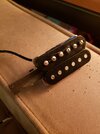


I'll say this; my favorite pickups have all been very microphonic.
Pretty much the same here. I don't know nuttin about magnets but I know unpotted pickups sound better (to me) and my all time favorite pickup, the T-Top, has short A-5's
